
SENSE/MAKE REFLECTIONS
Sense/Make was an interdisciplinary workshop series exploring the intersection of ecological remediation and creative practice, copresented by the Centre for Applied Ecological Remediation (CAER), Trade School, and Fathomers throughout fall 2025. Participants learned the basics of bioremediation and explored its poetic, political, and material dimensions: What stories live in the soil? What residues remain? And how might we compost harm into new forms of care? Designed for artists, scientists, musicians, land stewards, and community members, the workshops blended ecological fieldwork, creative process, and collective reflection.
Thank you to the people and microorganisms who joined us to share their curiosity, presence, and labor as we got subterranean with soil.
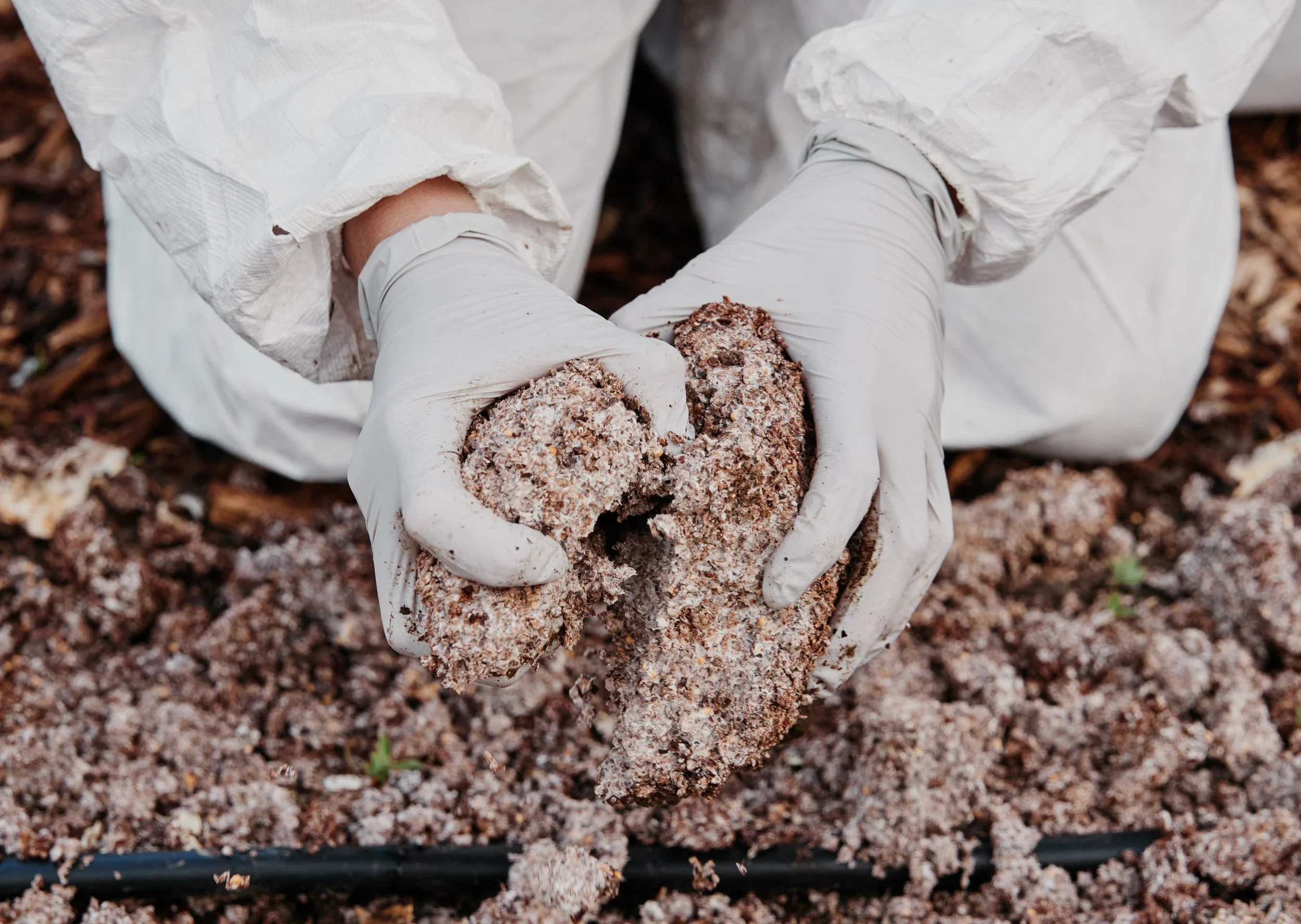
Image credit: Adam Armengual
WORKSHOP 01: Bioremediation 101—A Zine Workshop
PUBLIC RESOURCES:
(1) Danielle Stevenson et al., “Soil Drivers of Fungal, Bacterial, and Plant Diversity in Contaminated Southern Californian Sites: Implications for Dryland Bioremediation,” Science of the Total Environment 1000 (September 2025): Scientific Papers
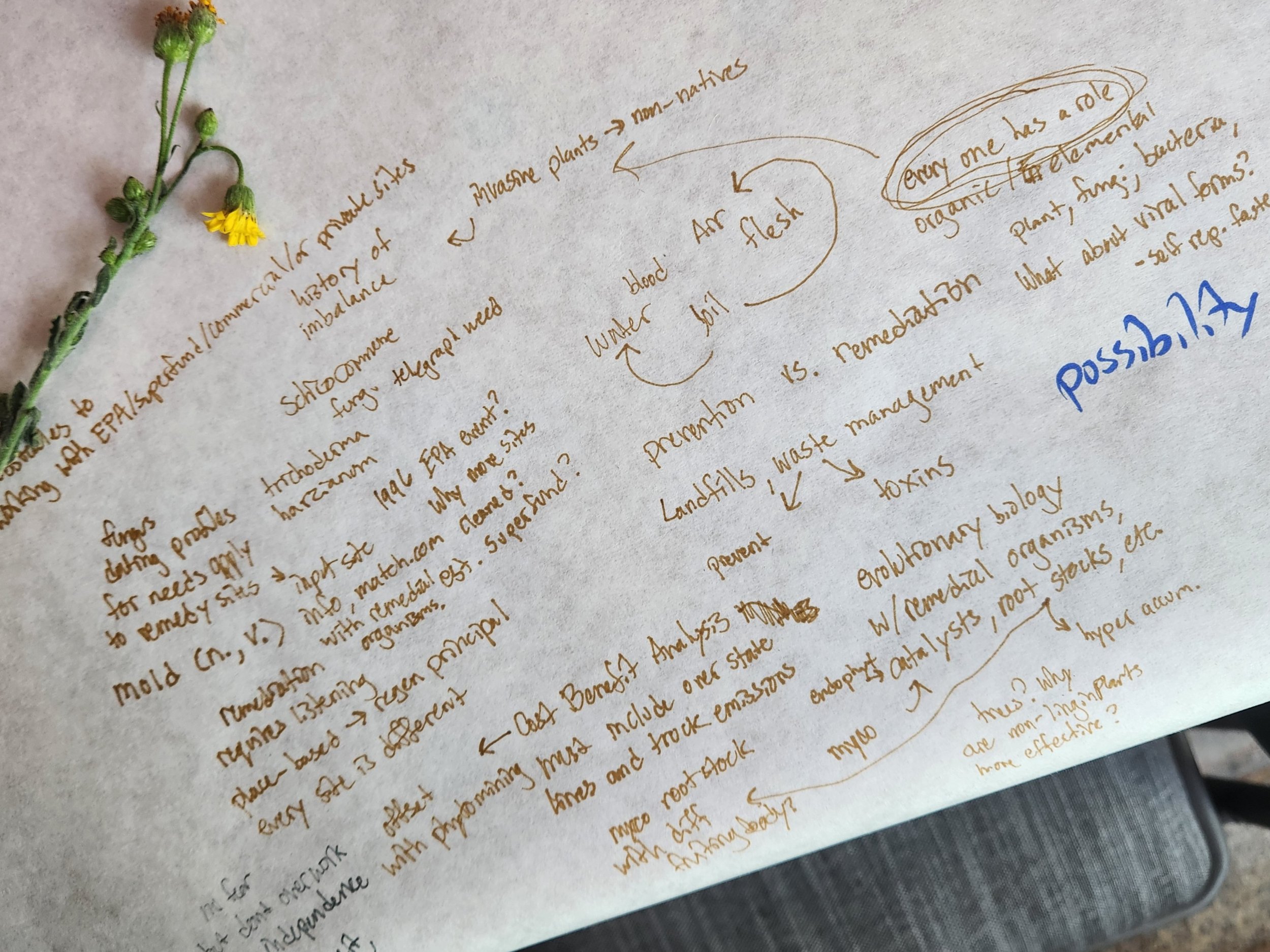
(2) Participants’ handwritten notes from the lecture: Table Notes
(3) Zines made by participants in Arden Stern’s zine-making workshop, including pdfs to print and share: Zines
In Bioremediation 101, Dr. Danielle Stevenson of the Centre for Applied Ecological Remediation taught participants the basics of bioremediation theory and history, including how to work with contaminated soils and how to use fungi and plants for ecological healing. In a guided discussion following Stevenson’s lecture, we interlaced case studies of Superfund sites and community gardens with personal stories of pollution in everyday life.
During the lecture and discussion, which took place at Trade School, we left material traces of this inquiry on tables covered with butcher paper, collectively annotating the session with comics, drawings, and notes.
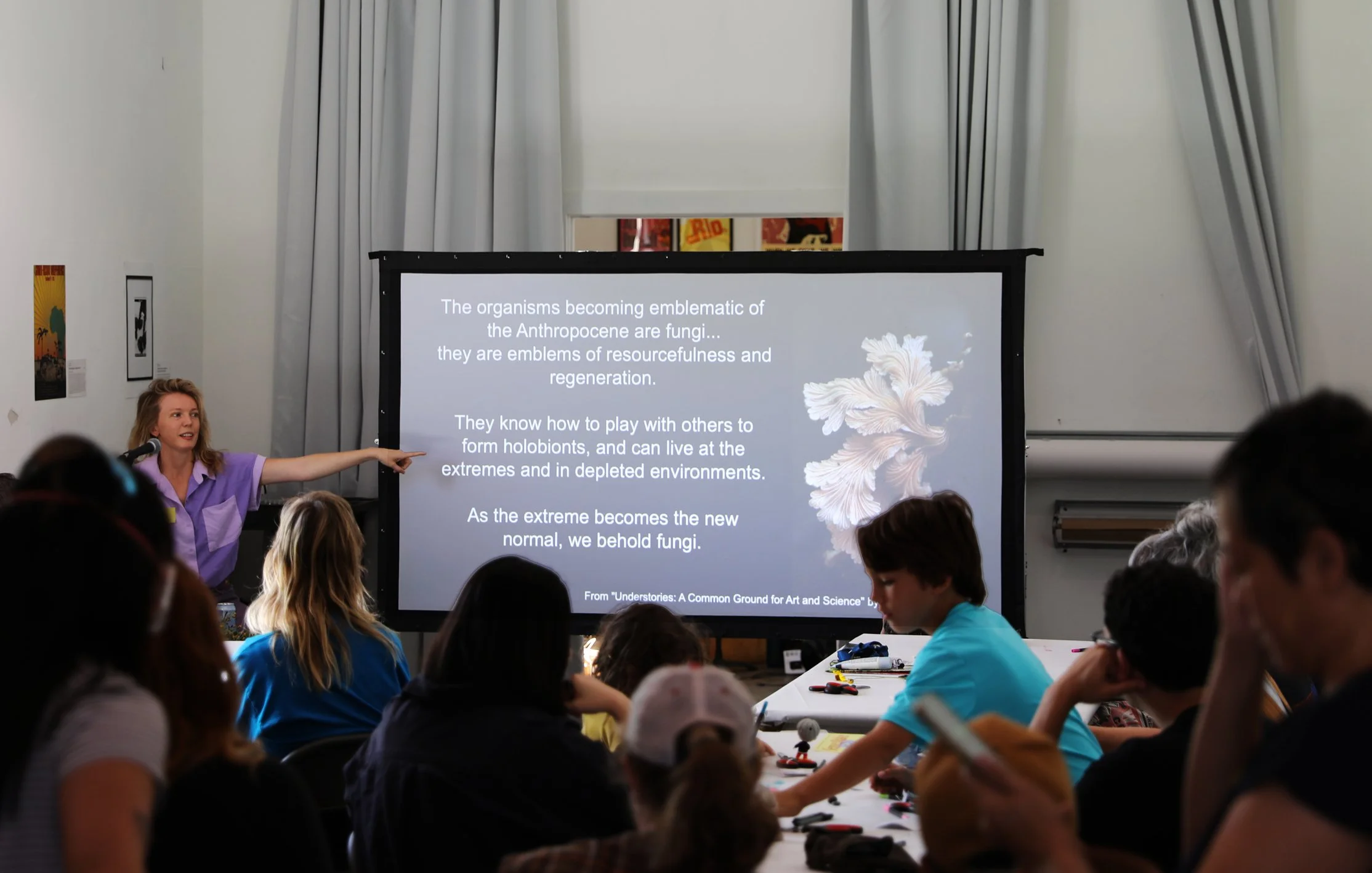
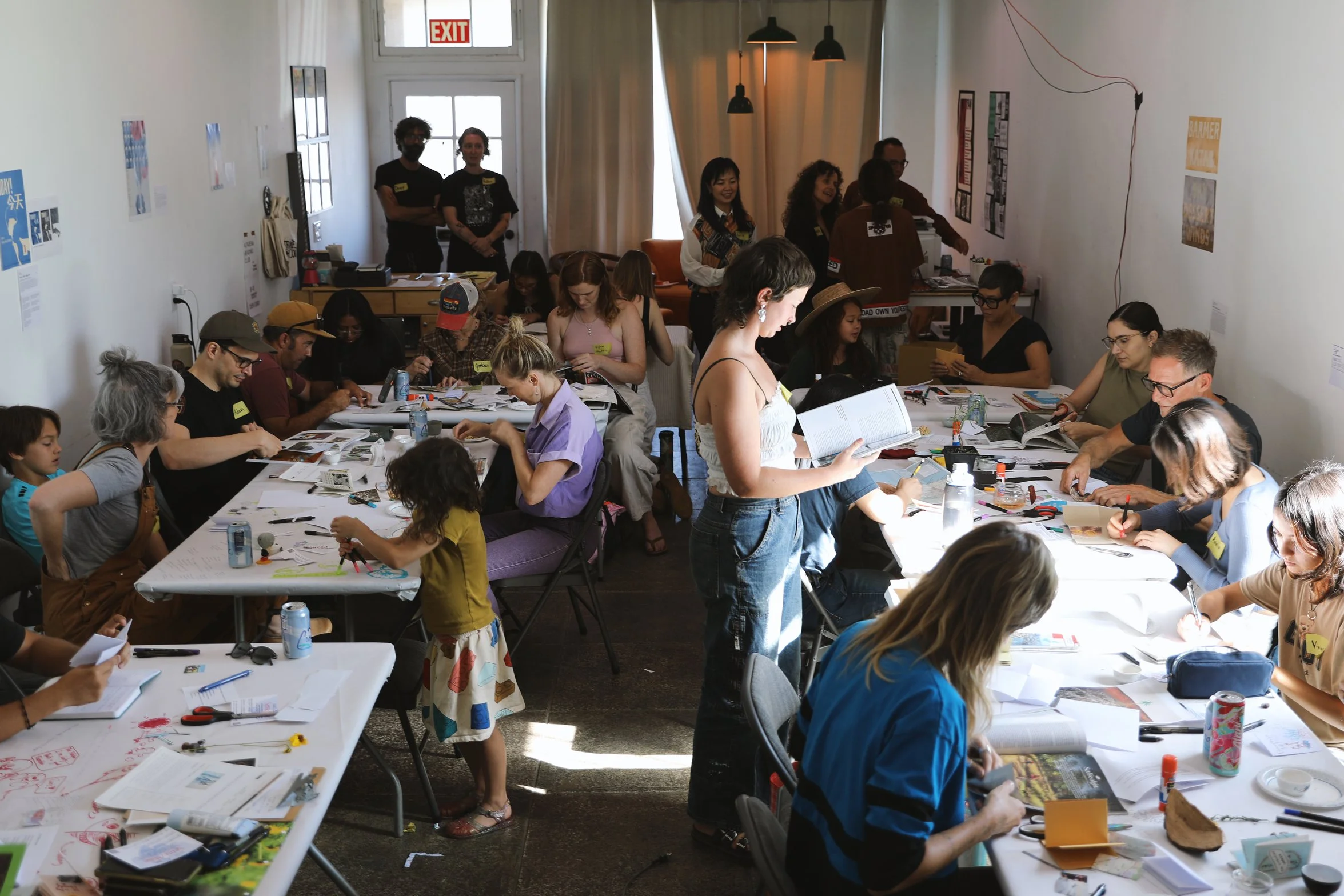
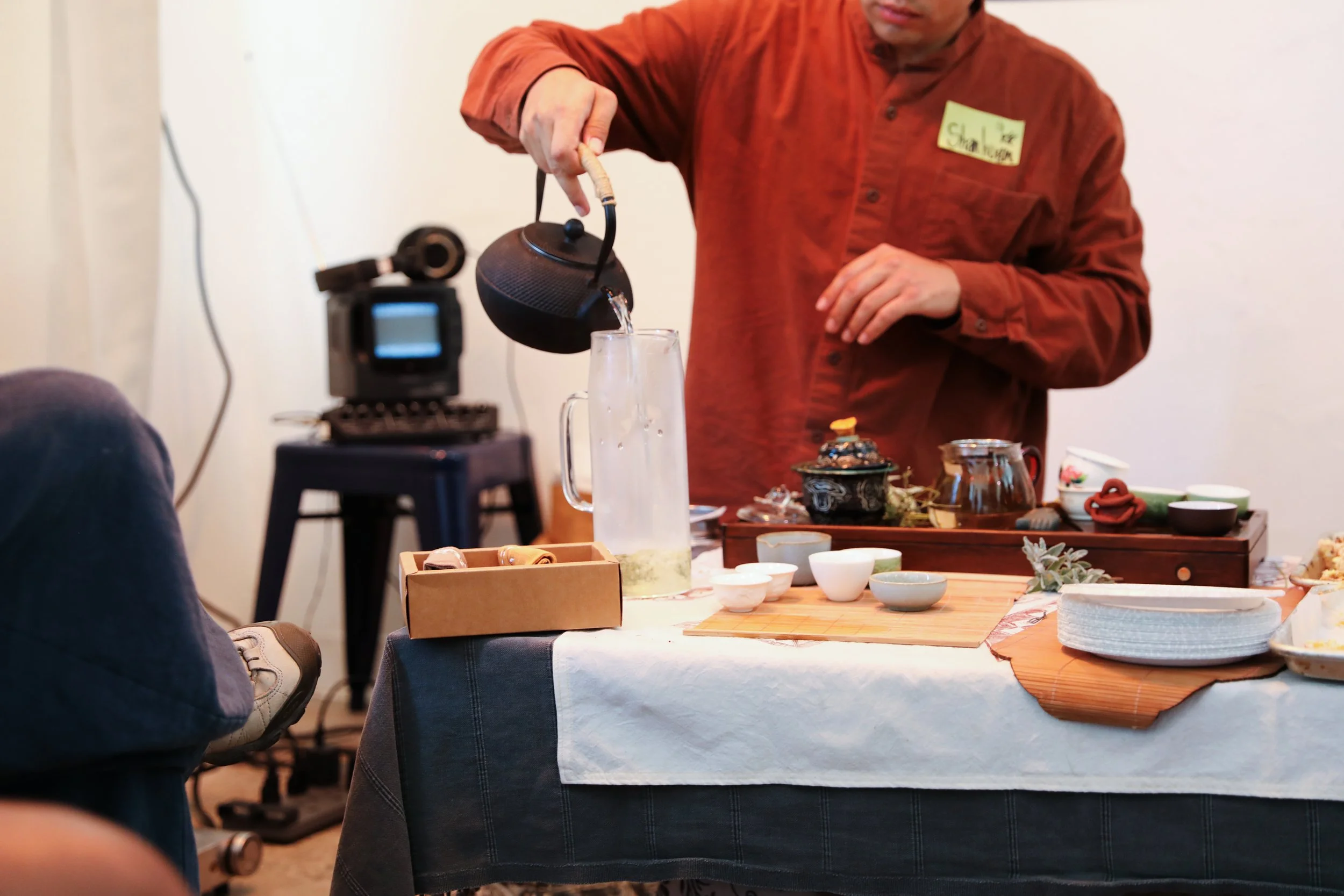
After a cozy tea break with filmmaker and cultural practitioner Shanhuan Manton, we synthesized the day’s findings in a hands-on zine-making workshop led by Arden Stern, a scholar of US visual culture and cofounder of Trade School.
“It was nice to be in an environment where questions were welcome and there were also people who could answer them in a lot of detail. Sometimes, just being in the room and overhearing discussions between people speaking on a higher level is a form of engaging with knowledge. With all the disciplines we brought in, there felt like a mutual osmosis of curiosity and skill across everyone.”
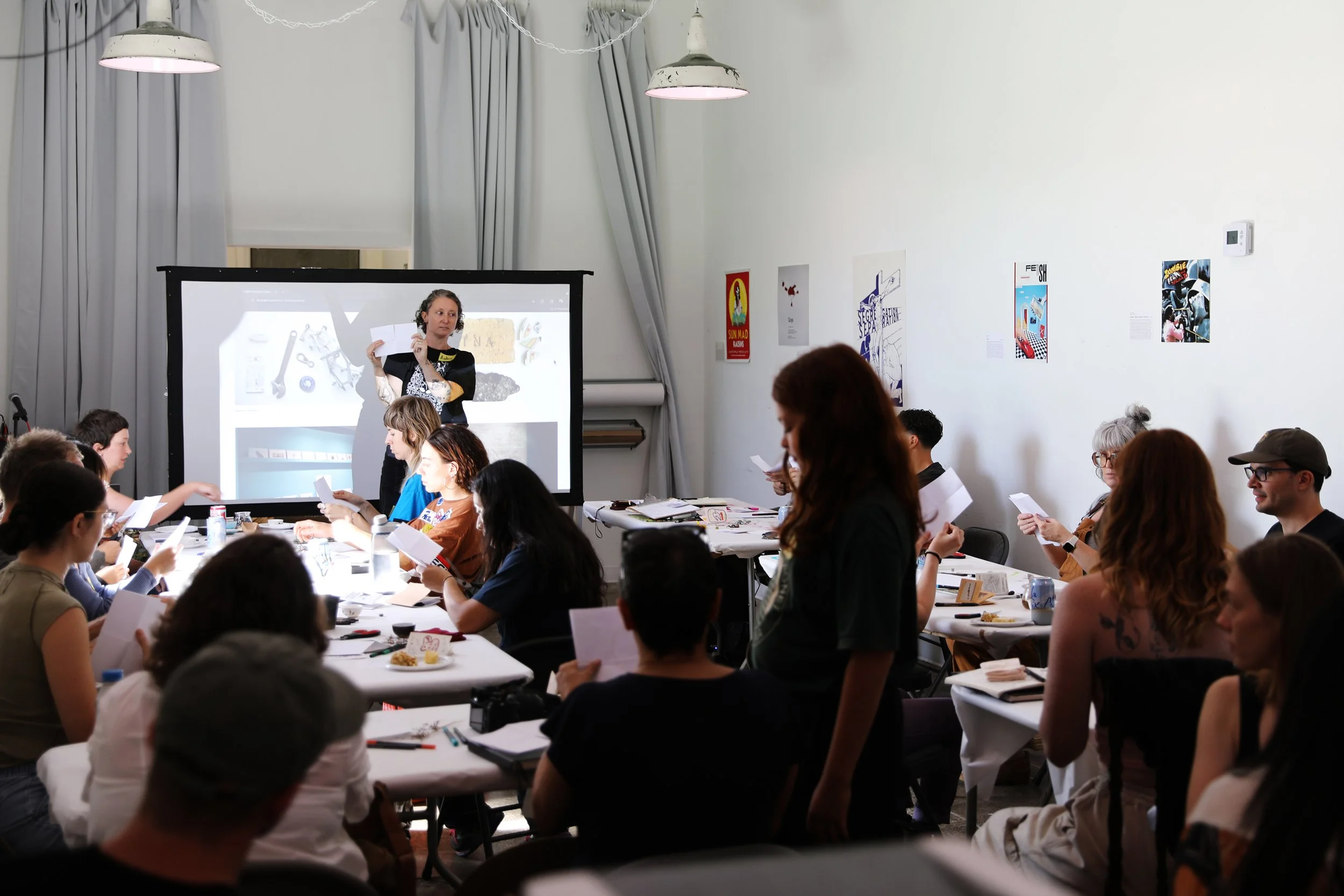
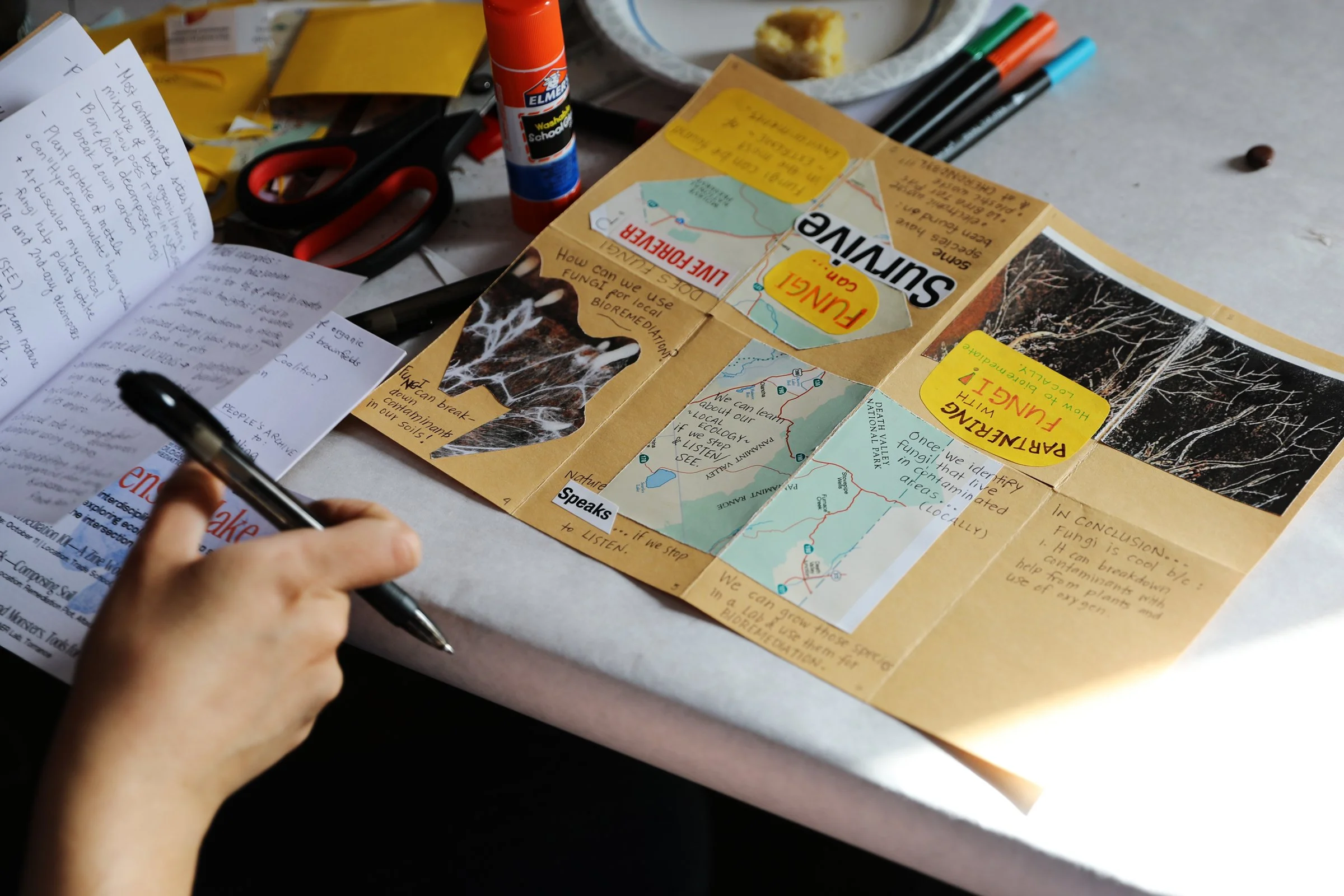
Experimenting with forms of collective study, we cut, collaged, copied, and swapped. We learned that remediator culture looks like digesting and transforming toxicity, and that having truly reciprocal relationships with fungi and plants requires learning to see the forms of life present on contaminated sites and understanding their needs so we can support their paths of recovery.
“Going into science, PhD-level stuff like environmental toxicology, from a different background, I had to learn a whole new language. During my PhD, I was always often given the feedback that I wasn’t speaking the technical language, that I was instead too easy to understand. So I was trained and shaped into speaking a very technical scientific language. . . . It was fun for me to hear how other people would describe land and land-based work through the zines or speak about some of these topics because there are actually so many ways of interacting with, talking about, and sharing this kind of work.”
WORKSHOP 02: Fieldwork—Composing Soil
PUBLIC RESOURCES:
(1) Soil Contaminant Testing Guide: Soil Contaminant Testing Guide.pdf
(2) “Memory Space” audio composition made by participants in Altadena, November 8, 2025: 11.08.25 (Altadena) Memory Space by SenseMake participants.mp3
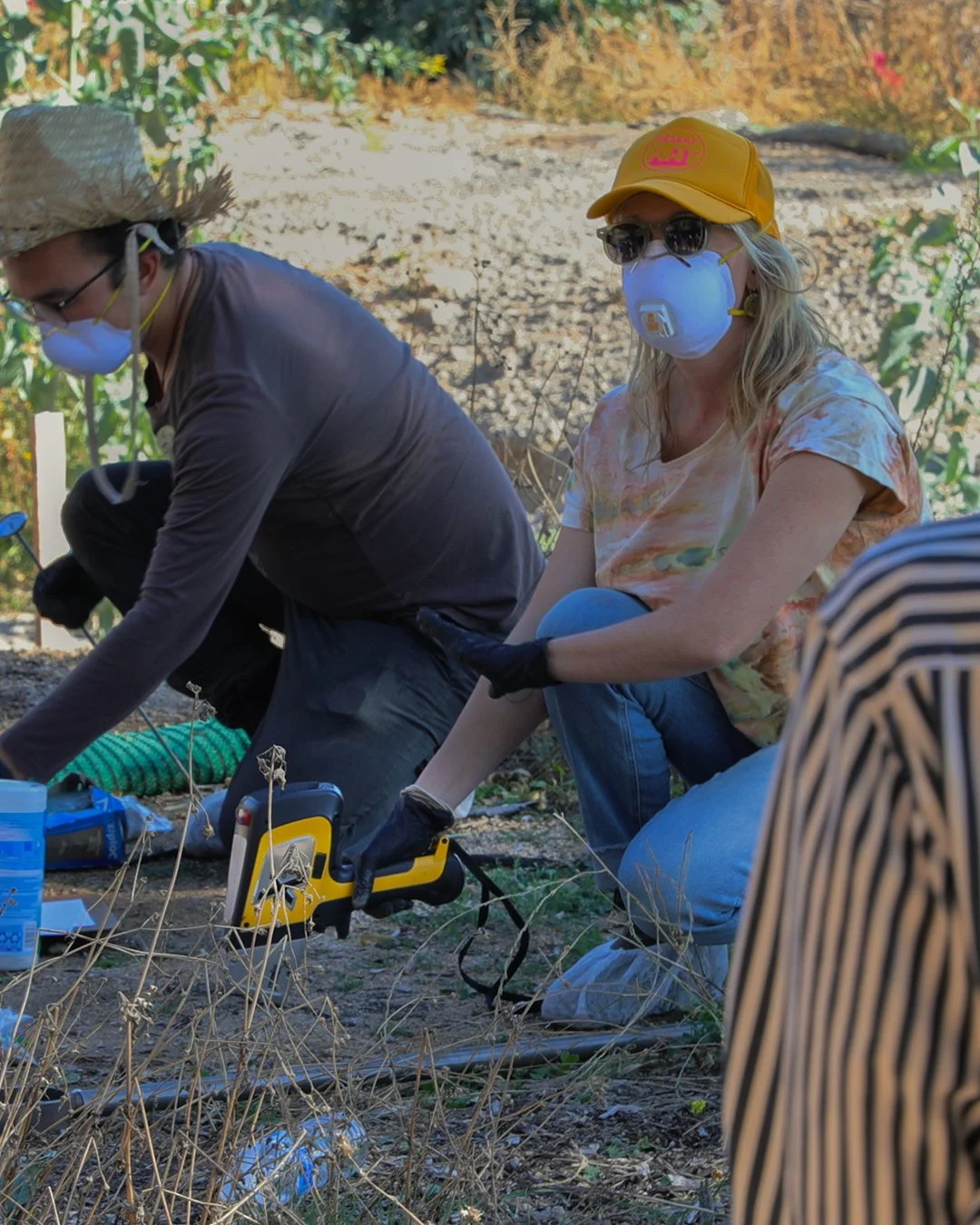
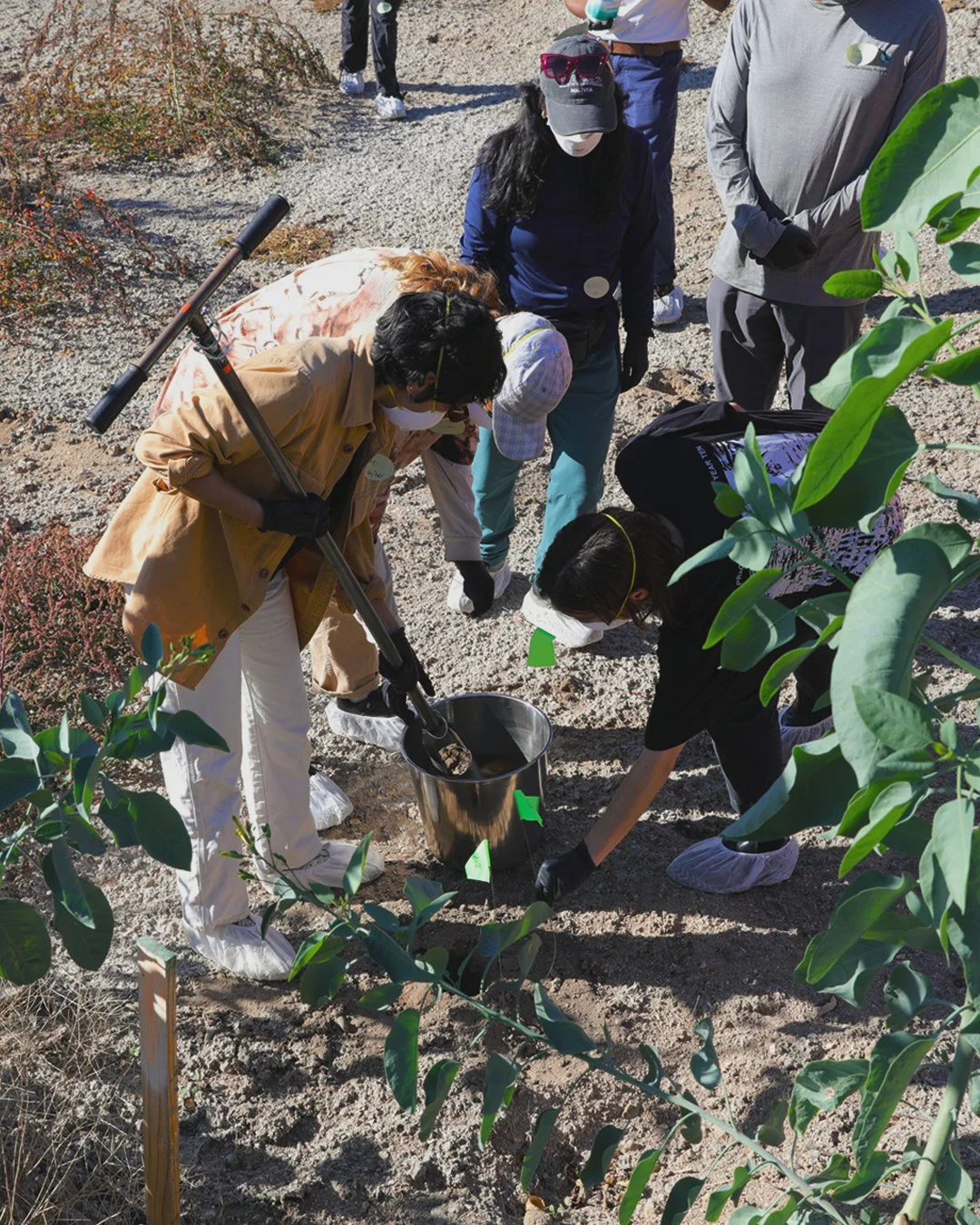
At a field site in Altadena, we learned how to safely interact with and explore contaminated land with Dr. Danielle Stevenson. We witnessed different plants naturally thriving at the site after the Eaton fire. For instance, tree tobacco, which accumulates cadmium from the soil, was already performing phytoremediation on the land. In groups, we investigated the composition of soil by taking environmental samples using field markers and augers. A handheld X-ray fluorescence analyzer revealed soil contaminants in real time.
“Sometimes when art and science try to collaborate, there can be a translational loss of integrity, like an oversimplification or disconnection from a practice with a lot of complexity and depth. [In Sense/Make,] it was really nice to uphold the integrity of the [scientific] practice and the complexity of the methods because if it’s oversimplified, then we’re not holding safety and care for our community.”
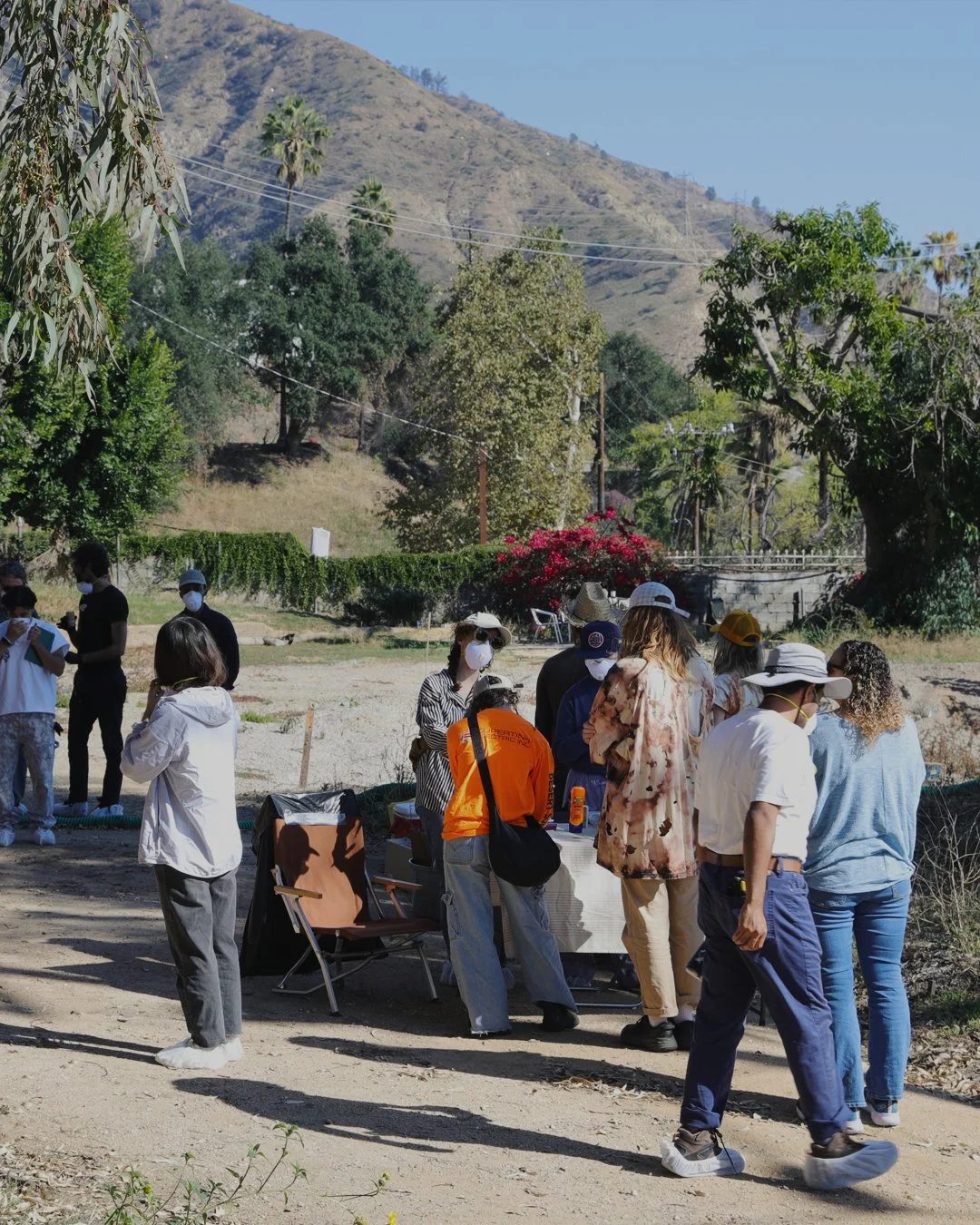
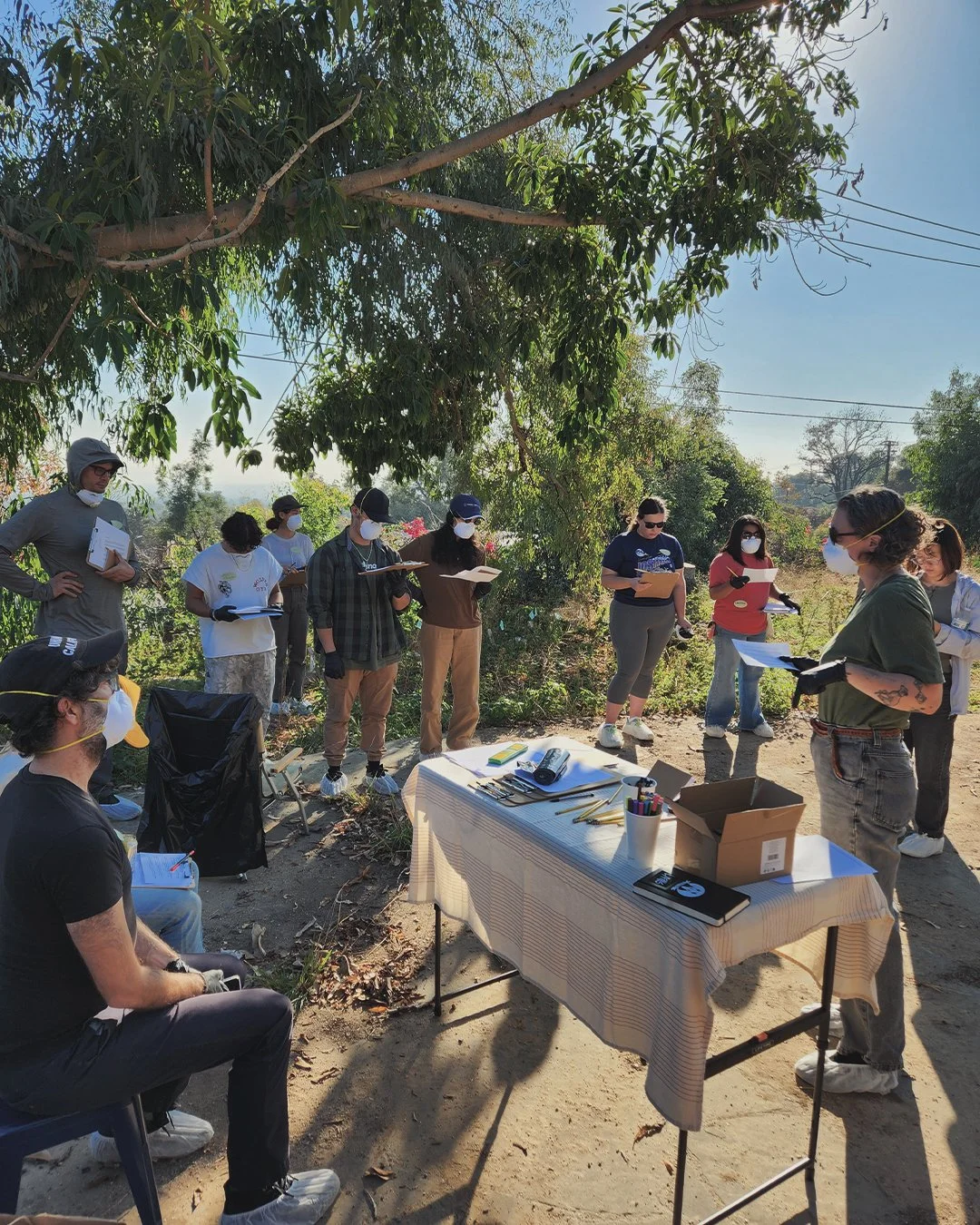
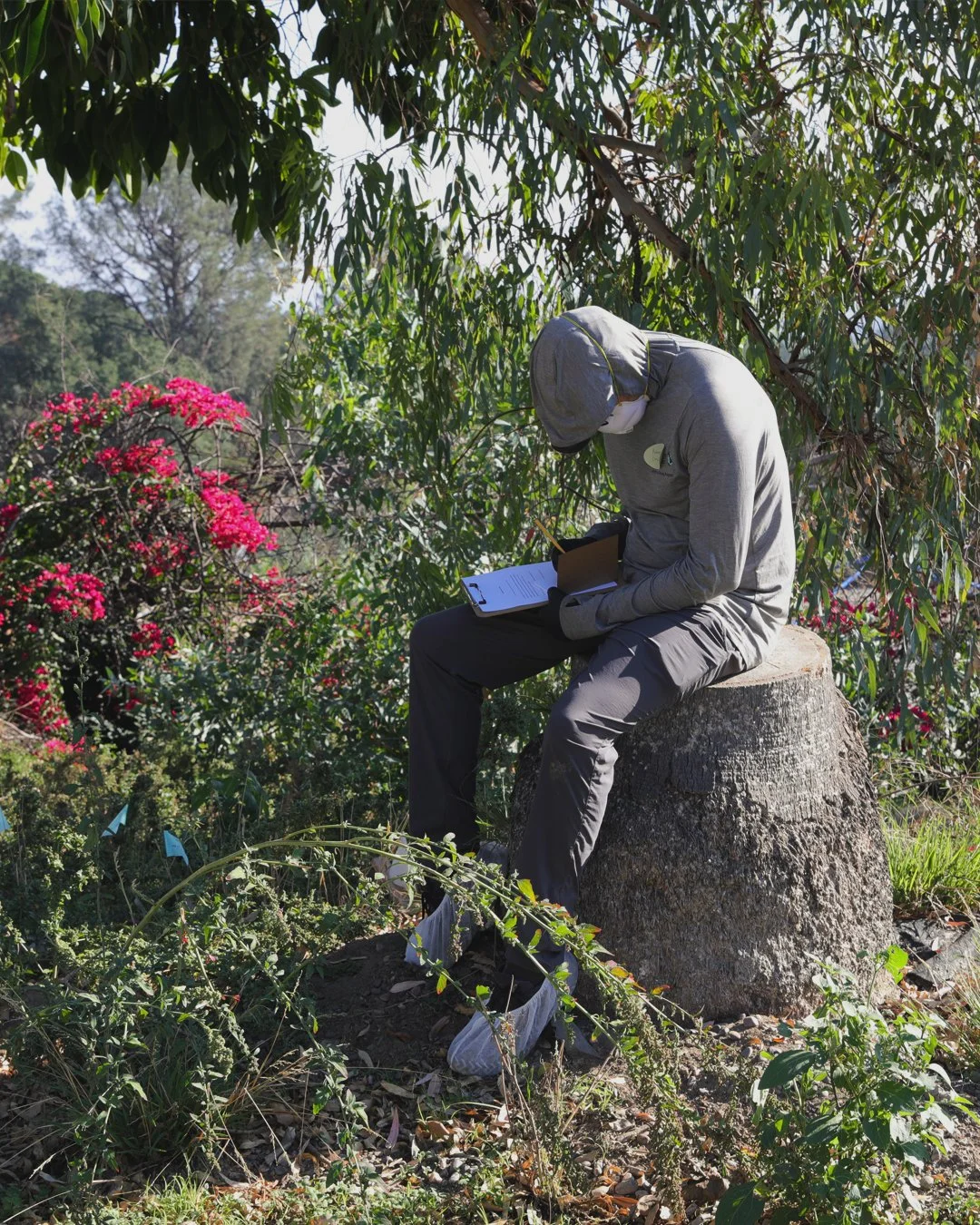
Next, we tuned in to land, plants, and fungi through sensory experiments in field recording and sketching led by Trade School cofounders Casey Anderson and Arden Stern. Inspired by Alvin Lucier’s 1970 composition (Hartford) Memory Space, we practiced an analog form of field recording, jotting down sounds in the space at ten-second intervals to create a “score” of the site. We drew unconventional “maps”: attending to the memory of space while sketching with eyes closed, drawing from an organism’s point of view, or zooming into the details of a six-by-six-inch frame of soil.
“One of the big issues I’ve noticed while working in a community-facing context is defaulting to a college-level framework, which is not super accessible. I do believe niche “knowledge” [like experimental music] can be very accessible when presented in an engaging way, but people often opt out if they feel like they’re not the target audience. So the more novel, more cross-disciplinary, more hands-on, the more significant it’s going to be for people [as they ask themselves]: Is this for me? Do I have permission to be here?”
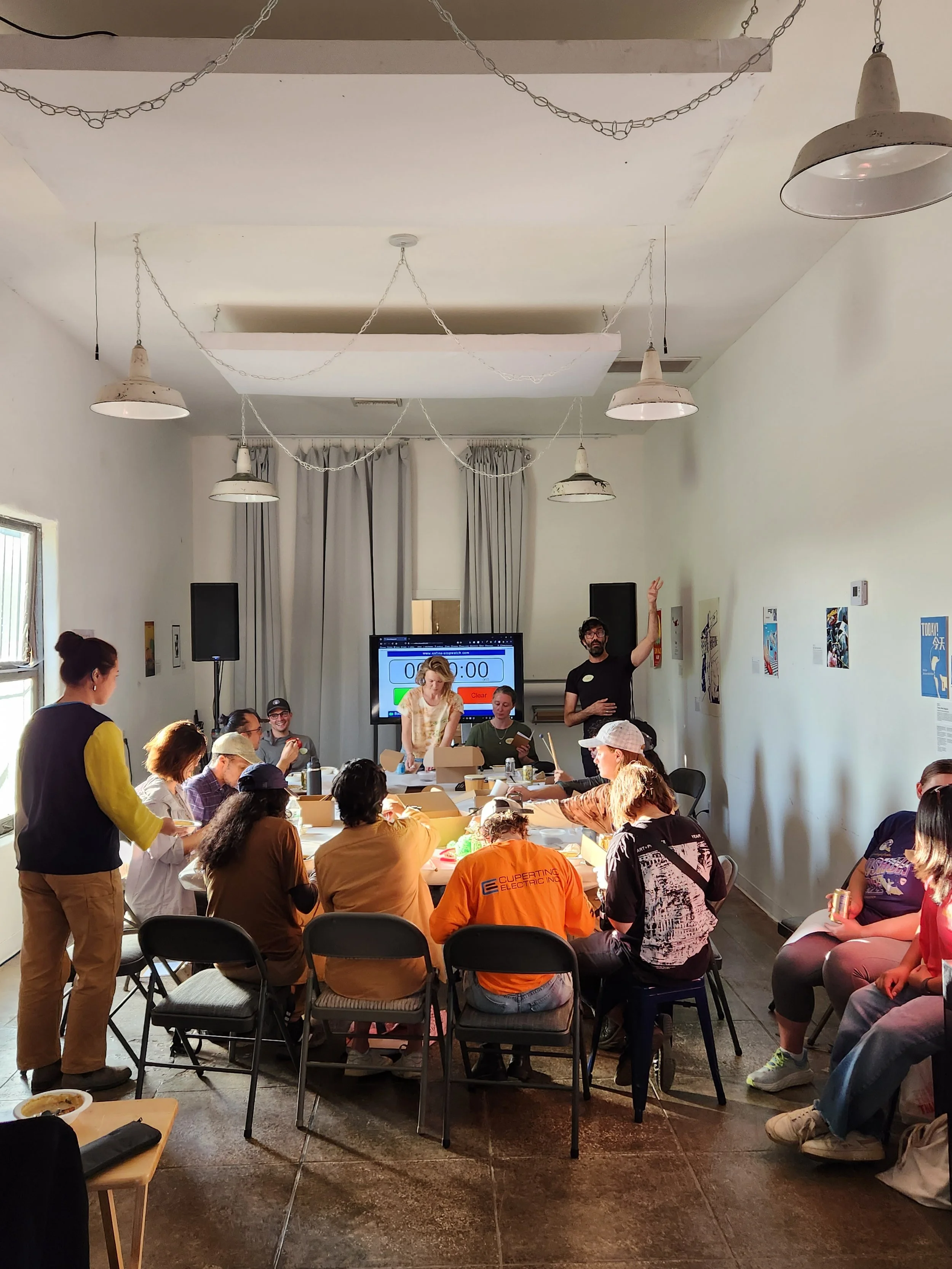
We then gathered at Trade School to assemble our field notes into a joint “composition” of the day. We recreated the field scores with found objects and instruments, performing together as amateur experimental musicians for five synchronized minutes. Amid the recreations of insects buzzing, birds tweeting, and construction tools hammering, there was laughter and remembrance. After our performance, we were nourished by a mushroom soup from Altadena-based Sparkles Soup.
“I think one of the reasons that we got such good participation was that this was about repairing, building, and imagining new ways of being that involve all of us collaborating. There’s a lot of randomness, a lot of chance and unruliness in nature, the arts, and the humanities, and a lot of really wonderful things happen out of those chance collaborations and encounters. And I think it’s where we’re very hungry right now for new possibilities, because it feels like a lot of things are collapsing. This is why science needs art and art needs science—because you can actually do real things in the world when you combine these two, when you respect the chance encounter, the unruliness and uncontrolled nature of things. It doesn’t mean that everything’s falling apart; it means that new possibilities are emerging. How do we create opportunities for people to grow something for themselves, or grow a new possibility?”
WORKSHOP 03: Lab—Microbes & Monsters, Tools for Healing
PUBLIC RESOURCES:
(1) Society for the Protection of Underground Networks (SPUN), Underground Atlas: Mycorrhizal Biodiversity Map v1.0
(2) Donna Haraway, Staying with the Trouble: Making Kin in the Chthulucene (Duke University Press, 2016)
(3) Donna Haraway, “A Cyborg Manifesto: Science, Technology, and Socialist-Feminism in the Late Twentieth Century” (1985/1991)
(4) Bayo Akomolafe, “When You Meet the Monster, Anoint Its Feet,” Emergence Magazine, October 16, 2018
(5) Martin Shaw, “Navigating the Mysteries,” Emergence Magazine, May 12, 2022
(6) Publications by Bread & Puppet Press
To close out the series, we joined the Centre for Applied Ecological Remediation at their new space in Downtown Los Angeles for a laboratory-based investigation. Under microscopy, we visualized soil contamination and the microbial life working to remediate it. We identified fungal spores and even witnessed one undergoing mitosis! Dr. Danielle Stevenson introduced us to arbuscular mycorrhizal fungi (AMF), microscopic tree-shaped “marketplaces” where fungi and plants trade and store contaminants and carbon, reducing soil toxicity and airborne greenhouse gases. AMF biodiversity struggles in areas of intensive urbanization with widespread concrete usage, such as Los Angeles, because they literally cannot cross the street to propagate.
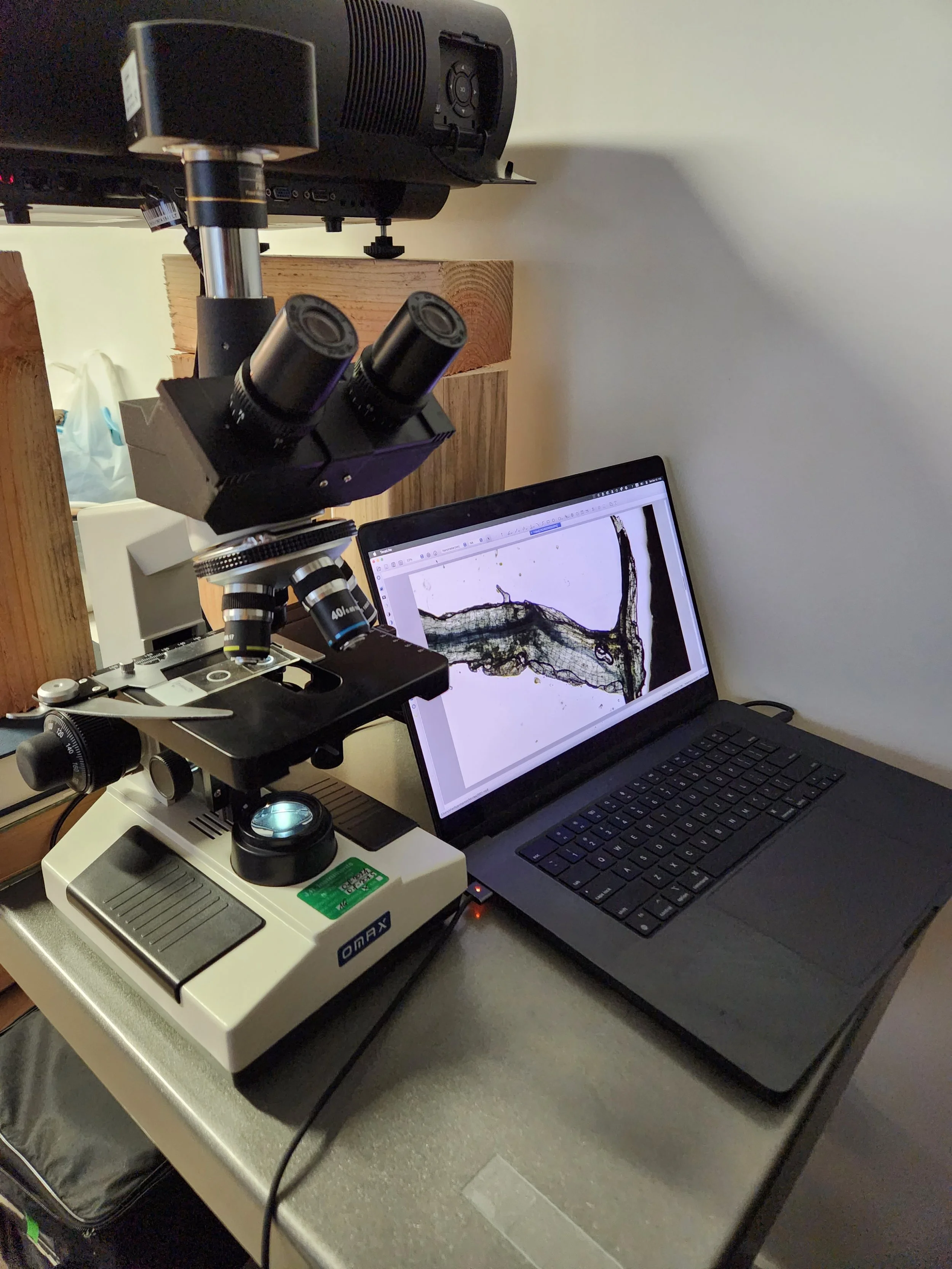
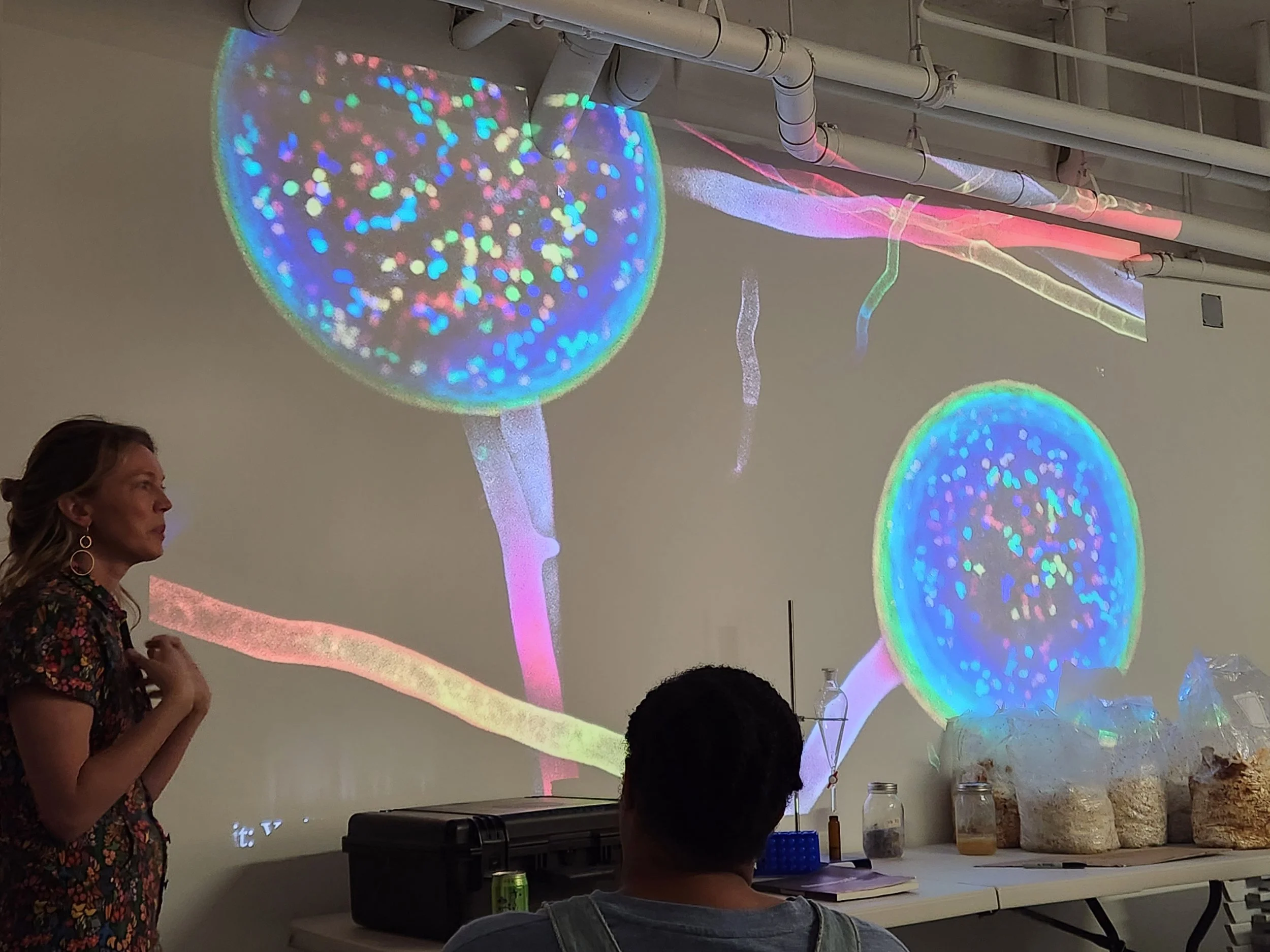
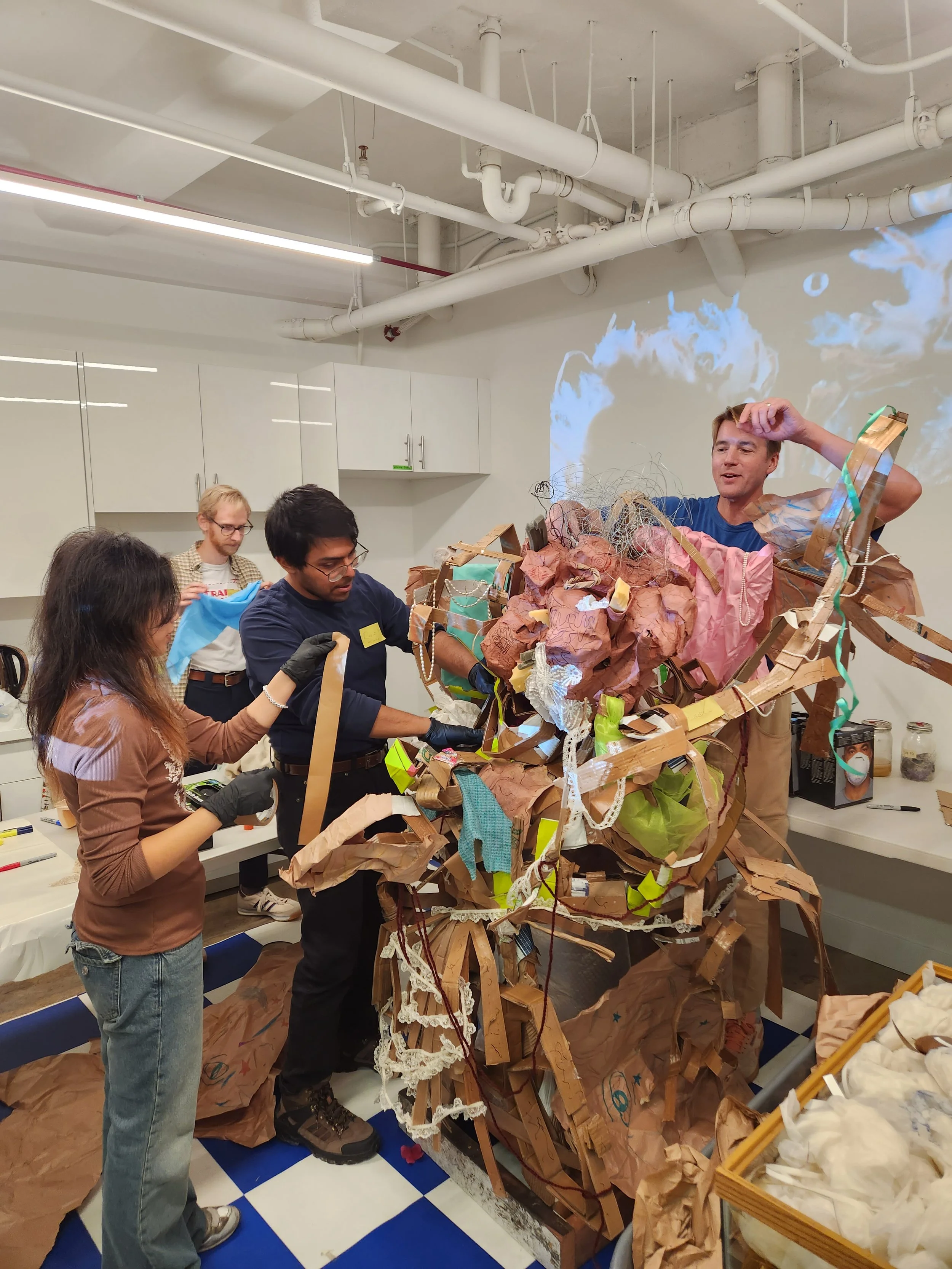
Next, Shanhuan Manton performed a meditative reading of excerpts by Donna Haraway, Bayo Akomolafe, Sophie Strand, and Martin Shaw to ground us in monstrous thinking. While listening to music by Ana Roxanne, we considered the histories of giant puppets and mythmaking as cultural technologies for healing and reinvention in uncertain times. Finally, we transformed the refuse from CAER’s laboratory relocation into a monster assemblage by piecing together cardboard strips treated with contact cement.
“I feel like now, the catchphrase “the body keeps the score” is quite common, but how do we expand that understanding of the body beyond our physical human bodies to the environmental or ecosystemic bodies that we’re made of? [For example,] how can the mechanisms and effects of soil and environmental pollution help us understand or be mapped to intergenerational trauma or interpersonal conflict? Can we find a shared vocabulary that explains without flattening? Is there similarity in how you approach a brownfield and a conflict between two different cultural groups? How would you do soil sampling in that context? What does it look like to name the toxins, and what do you need to do to break down, transport, or stabilize things in that context?”
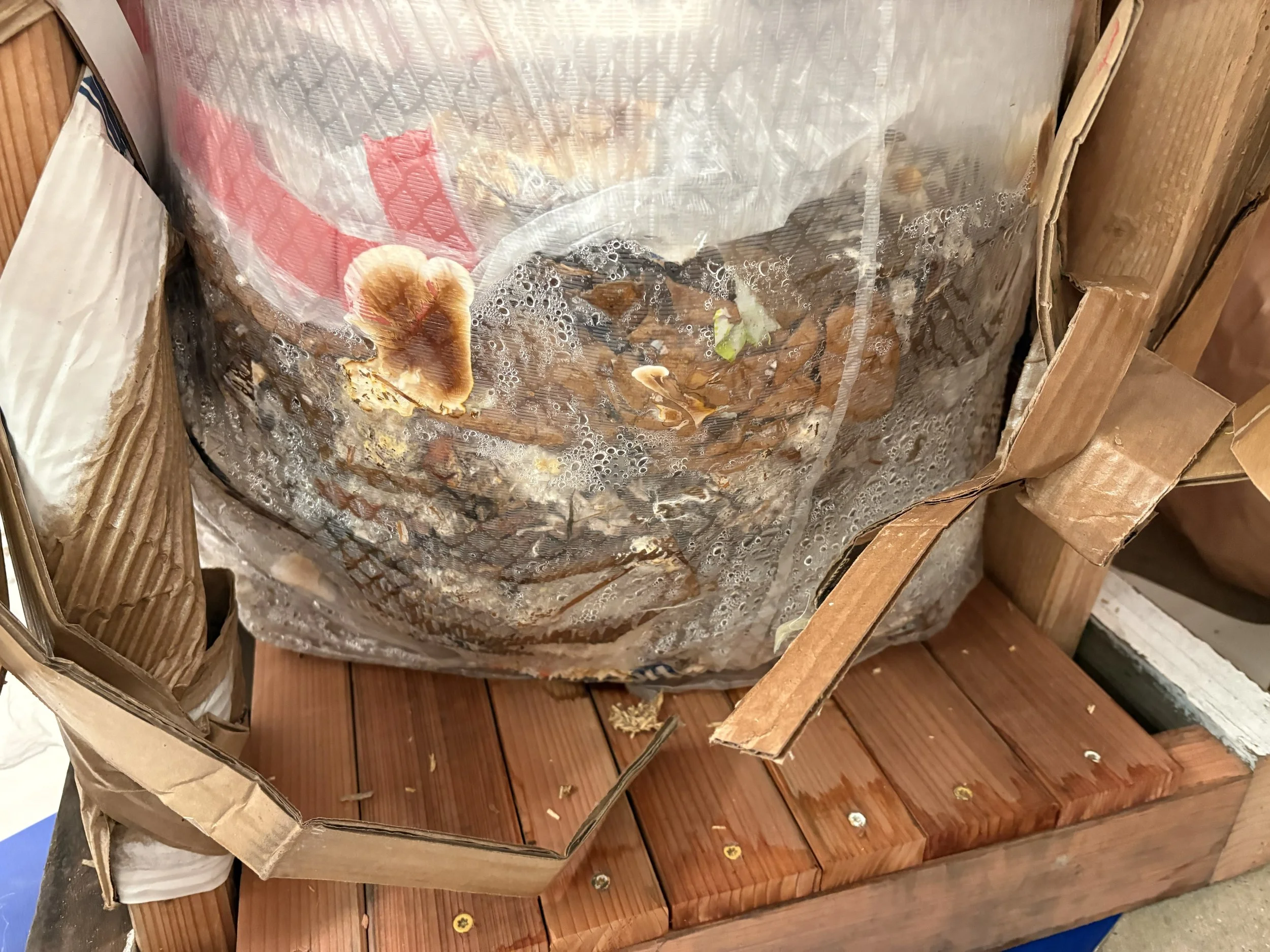
Our material experiments reappropriated everyday waste, from HI-CHEW wrappers to shipping envelopes, into sculptural supplies to make a monster, which we then assuaged and adorned with lace, flowers, and jewelry. After play and much improvisation, we transformed the puppet monster into a living organism by inoculating it with fungi; the reishi mushrooms are now blooming. In biodegrading refuse, we ask: Where do materials come from and where do they go? What is their afterlife in landfills? Can it be otherwise?
—Annie Zeng
BIOGRAPHIES
Annie Zeng is a Los Angeles–based cultural researcher and producer. As head of collective inquiry and learning at Fathomers, she produced Sense/Make and other programs bridging the arts and biological sciences. Through participatory exhibitions and programs developed locally, internationally, and online, Annie creates spaces for interdisciplinary thinking and making, foregrounding curiosity, care, and collaboration amid a climate-stressed and socially fragmented world. She holds an MS in Cultures of Arts, Science, and Technology from Maastricht University.
Arden Stern is a scholar of US visual culture whose research focuses on the labor history of graphic design and printing. Arden is an associate professor of humanities and sciences at ArtCenter College of Design and a proud member of the ArtCenter Faculty Federation–AFT Local 5648, and has contributed to publications including the Journal of Design History, Design and Culture, Design Issues, and PRINT.
Casey Anderson is a musician and sound artist, creative technologist, educator, and community organizer. Casey designs and repurposes technologies to activate participatory practice, primarily involving explorations of sound, in diverse cultures and communities.
Danielle Stevenson is a multidisciplinary mycologist and environmental scientist advancing mycoremediation and nature-based pollution cleanup. She holds a PhD in environmental toxicology from the University of California, Riverside. As the founder and executive and scientific director of the Centre for Applied Ecological Remediation, she partners with communities, researchers, and policymakers to deploy fungal–plant systems to remediate and restore contaminated lands. Her initiatives—including Healing City Soils, DIY Fungi, and community and youth bioremediation programs—combine science, training, and cultural practice to address pollution, support climate resilience, and restore ecosystems.
Shanhuan Manton is a filmmaker and ecological artist composting storytelling technologies into regenerative rituals, experimenting interdisciplinarily with making real the worlds we yearn for through collective storytelling. They explore interspecies collaboration protocols and the aesthetics of multispecies thriving through filmmaking, experience design, and facilitating collective study. Shanhuan’s collaborations have woven community globally, and range from spontaneous tea services on street corners and cinematic additions to the Alien franchise to teaching their Collective Mythmaking course at School of the Alternative and stewarding LIOS Labs’ School of Ecological Imagination.