
TWELVE EARTHS SITE 04 Announcement
Ka kitea te whakamāoritanga o tēnei pānui pāpāho ki konei.
Fathomers and Michael Jones McKean Studio are excited to announce the waters off Wharariki Beach in Aotearoa New Zealand’s South Taranaki Bight as the fourth location in Michael Jones McKean’s longform planetary sculpture Twelve Earths.
McKean’s Twelve Earths [c. 2017-2028 | 2029-2040] is an unprecedented multidisciplinary endeavor that links 12 diverse sites on a 25,000-mile circumference line encircling Earth.
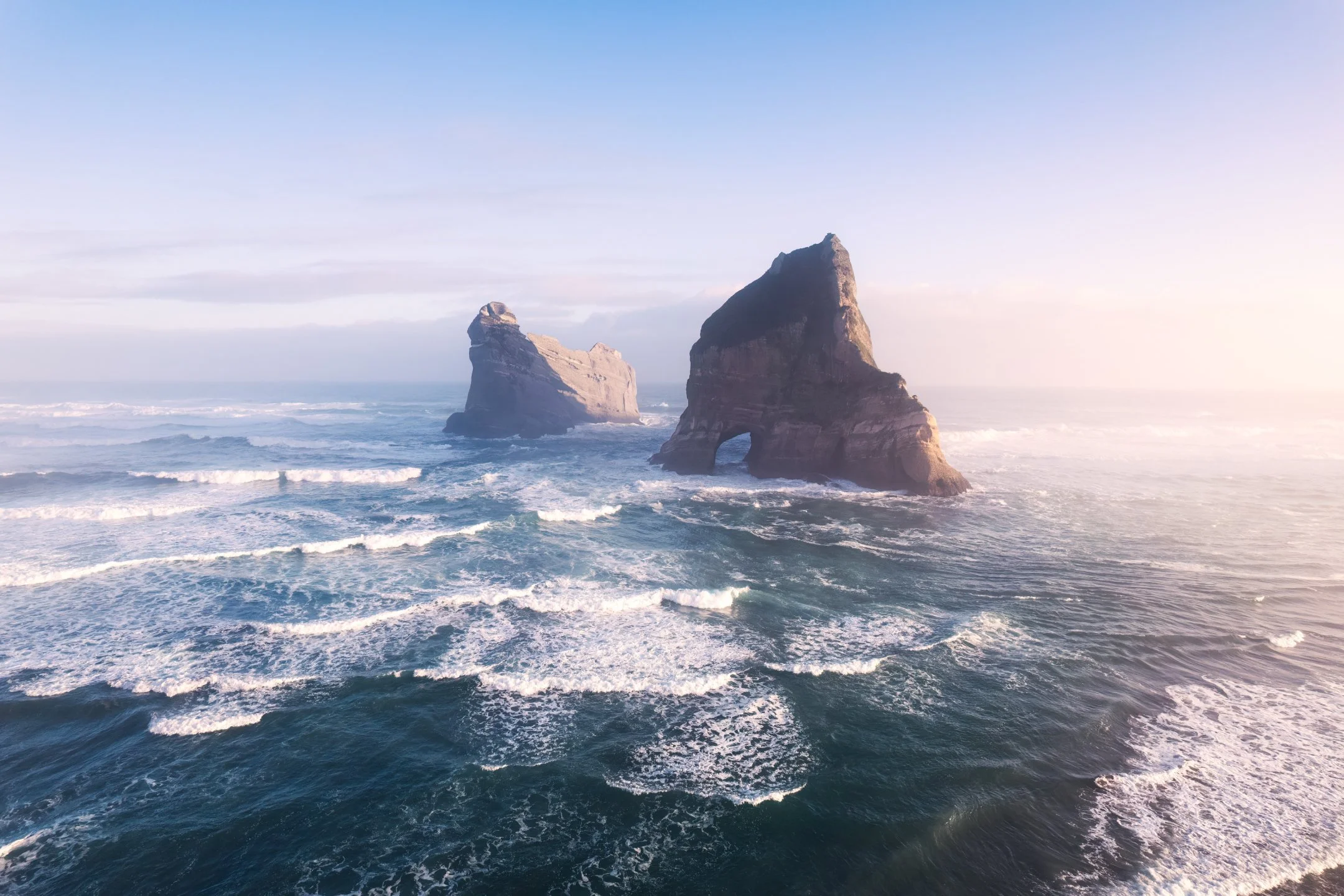
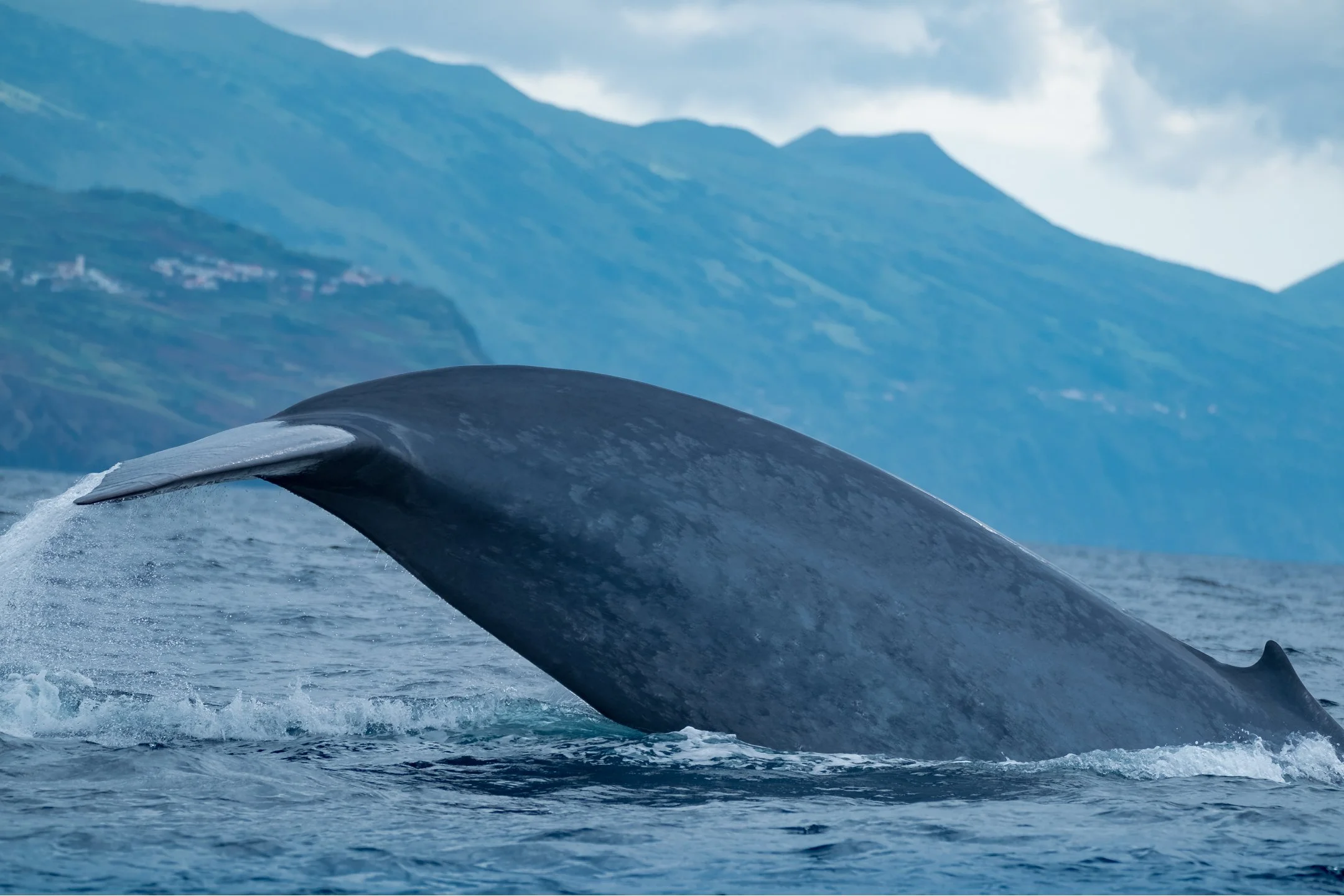
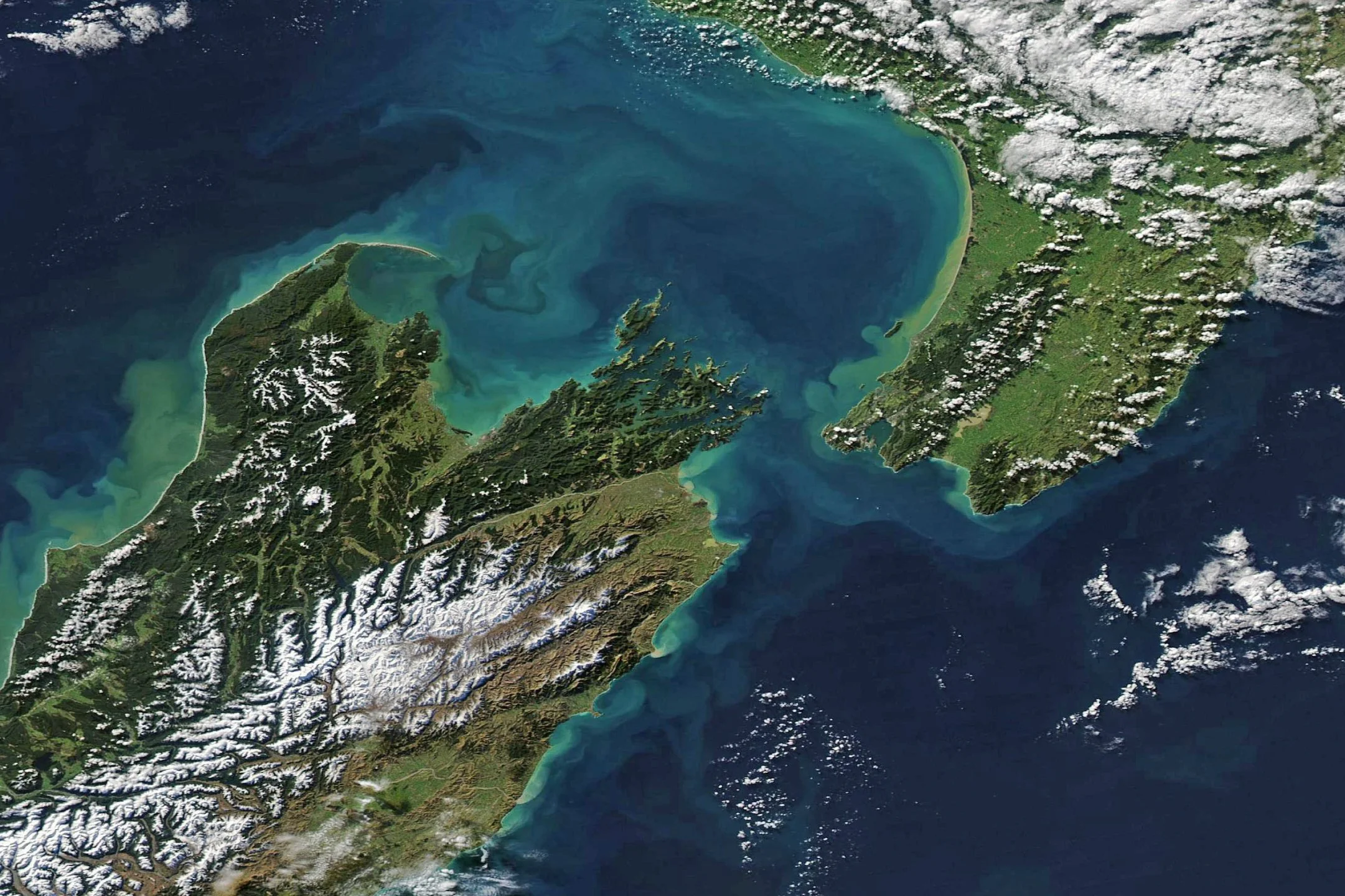
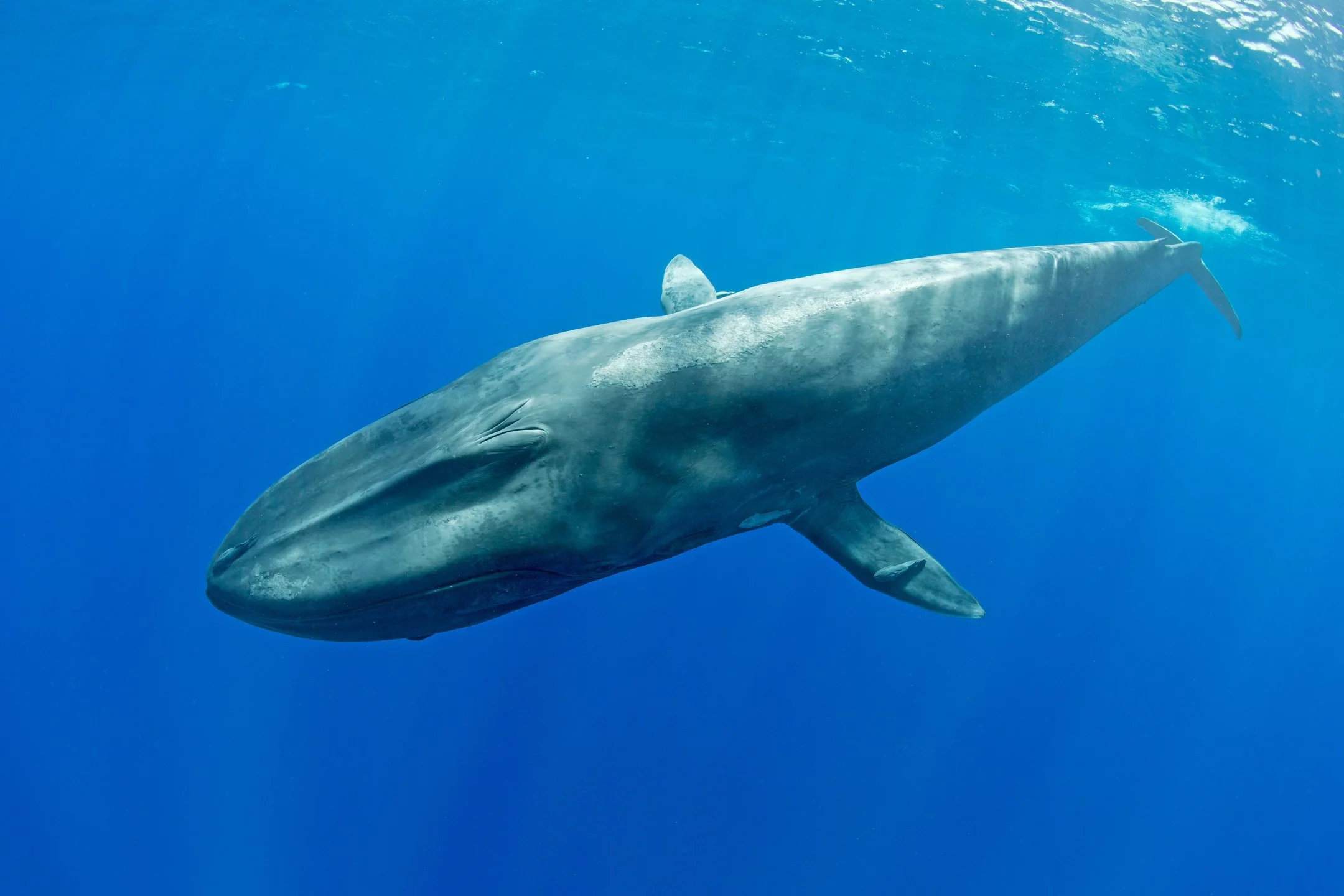
South Taranaki Bight is an expanse of water connecting the North and South Islands with the Tasman Sea. Its waters are the only known foraging grounds for the blue whales of Aotearoa New Zealand. It is also home to at least eight species of whales, including a unique population of non-migratory pygmy blue whales. Says McKean:
“An encounter with a whale conjures emotions reserved for the most intense experience with the natural world—wonder beyond knowing. A whale might be the most mythic manifestation of life on Earth—the animal-limit of earthly possibility. But even with a colossal oceanic membrane separating our worlds, we share in our lungs the same air.”
This February, McKean will join Dr. Leigh Torres from Oregon State University’s Marine Mammal Institute and a team of researchers from the Geospatial Ecology of Marine Megafauna Laboratory (GEMM Lab) as they continue their research about this unique blue whale population. Torres’ research has been instrumental in redrawing our collective understanding of whale life and shaping approaches to species protection and environmental management in the Bight. Says Torres:
“Studying blue whales in Aotearoa New Zealand for the past 15 years has been a fulfilling journey—from population discovery to population description and now toward a deeper understanding of their health, behavior, and movements. We are thrilled to have Michael on board our research vessel this year, which will help us to see our study system from a new perspective and to share the amazing story of these whales more broadly.”
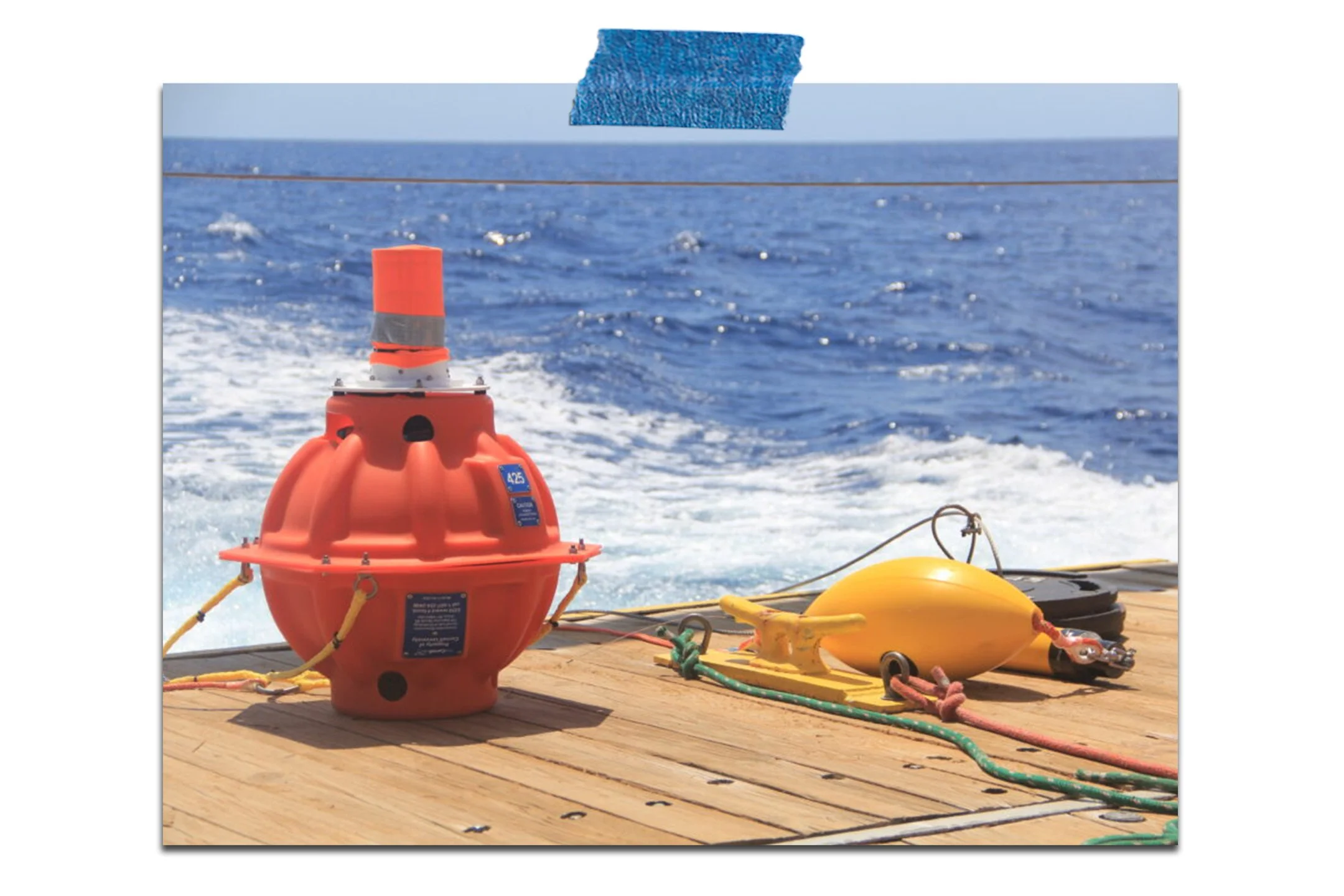
While on board the research vessel, McKean will help to deploy a specially designed hydrophone at a location directly along Twelve Earths’ ring path. The hydrophone, a complex listening and recording system, will archive an entire year of mostly infrasonic blue whale calls—haunting communiqués that, while the loudest sounds made by an animal on the planet, are also below the threshold of human auditory perception. These calls travel 100s if not 1000s of kilometers underwater.
The hydrophone, designed by Cornell University’s K. Lisa Yang Center for Conservation Bioacoustics and customized by McKean, is hermetically sealed within a buoyant 17-inch glass sphere. The device is robust enough to survive demanding conditions in the mesopelagic zone, which extends up to 1,000 meters below the surface, where light and temperature decrease markedly. The hydrophone bears a titanium disc, a Twelve Earths cipher, which includes markings and symbols from each site on the ring path. The custom disc subtly gives this scientific device a double life as a sculpture.
Says Stacy Switzer, curator and executive director of Fathomers:
“We are thrilled by this announcement. In important respects, this site epitomizes some of the core commitments of Twelve Earths: deep and practical engagement with scientific experts, careful relationship-building with local communities, and artistic experience that spurs us to imagine with greater sensitivity our place on the planet.”
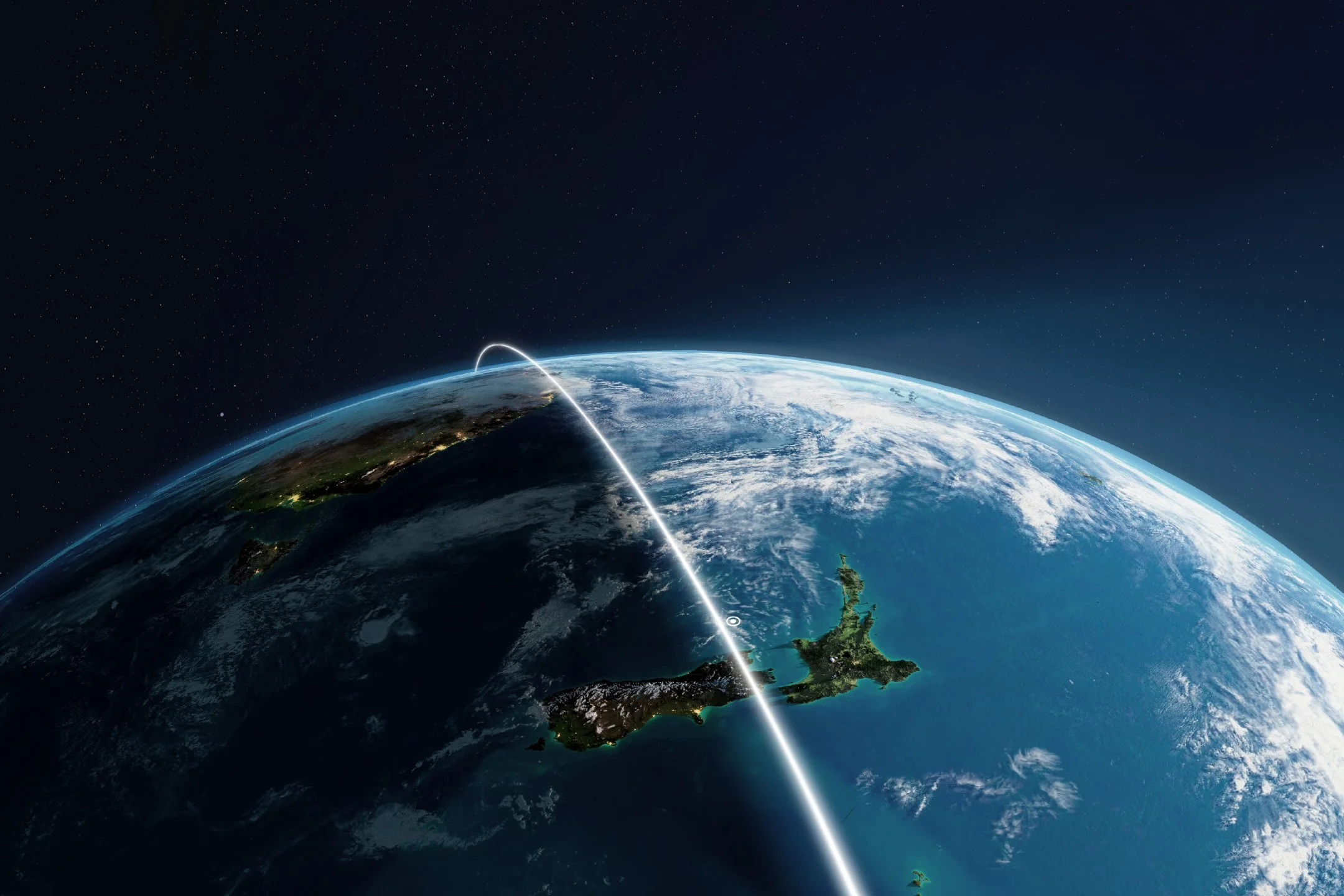
Looking ahead into 2027, McKean will build deeper local connections in Aotearoa New Zealand with a residency at Te Whare Hēra in Wellington. This announcement follows Cerro Pachón and Tololo in Chile, where McKean is working as the Vera C. Rubin Observatory Artist-in-Residence; Abrigo do Lagar Velho, a paleolithic archeological site in Portugal; and Nördlinger Ries, a thriving city in southern Germany sited within a 15 million-year-old impact crater. At each location, McKean is creating individual sculptures that together, connect each site as part of an unfolding portrait of Earth.
For more information about Twelve Earths, McKean’s work in Aotearoa New Zealand, or how to become involved or help support the project, please visit twelveearths.com or reach out to yes@fathomers.org.
Image credits (top to bottom, left to right): 1) Archway Islands off Wharariki beach; 2) Blue whale off the coast of Aotearoa New Zealand; 3) Rockhopper off the coast of Aoteroa New Zealand; 4) NASA satellite image of Aotearoa New Zealand's South Taranaki Bight; 5) Pygmy blue whale; 6) Artist rendering, the waters off Wharariki Beach in Aotearoa New Zealand’s South Taranaki Bight along Twelve Earths’ ring path. Credit: Michael Jones McKean Studio
ABOUT MICHAeL JONES MCKEAN
Michael Jones McKean (b. Federated States of Micronesia, lives/works in the US and France) is a sculptor whose work explores the nature of objects in relation to folklore, technology, anthropology, and geography. McKean has received numerous awards, including a Guggenheim Fellowship and a Nancy Graves Foundation Award, and has lectured and shown his work extensively around the world. He is currently an Associate Professor at Virginia Commonwealth University in the Sculpture + Extended Media Department; a Contributing Editor for Art Papers; and the Artist-in-Residence of the Vera C. Rubin Observatory and the Centro de Interpretação do Abrigo do Lagar Velho. michaeljonesmckean.com
ABOUT the waters off wharariki beach
The waters off Wharariki beach are located in the extended region of Aotearoa New Zealand‘s South Taranaki Bight, where a recently discovered population of non-migratory blue whales lives. One of the most mysterious cetaceans, the blue whale is the largest animal known to have existed on Earth.